Equipment Migrations: Carbon Fiber Tweaks from Cycling Frames Finding New Roles in Amateur Tennis Rackets and Youth Baseball Bats While Altering Swing Speeds and Durability Across Those Circuits
Gisela Wolf · Oct 10, 2026
Equipment Migrations: Carbon Fiber Tweaks from Cycling Frames Finding New Roles in Amateur Tennis Rackets and Youth Baseball Bats While Altering Swing Speeds and Durability Across Those Circuits
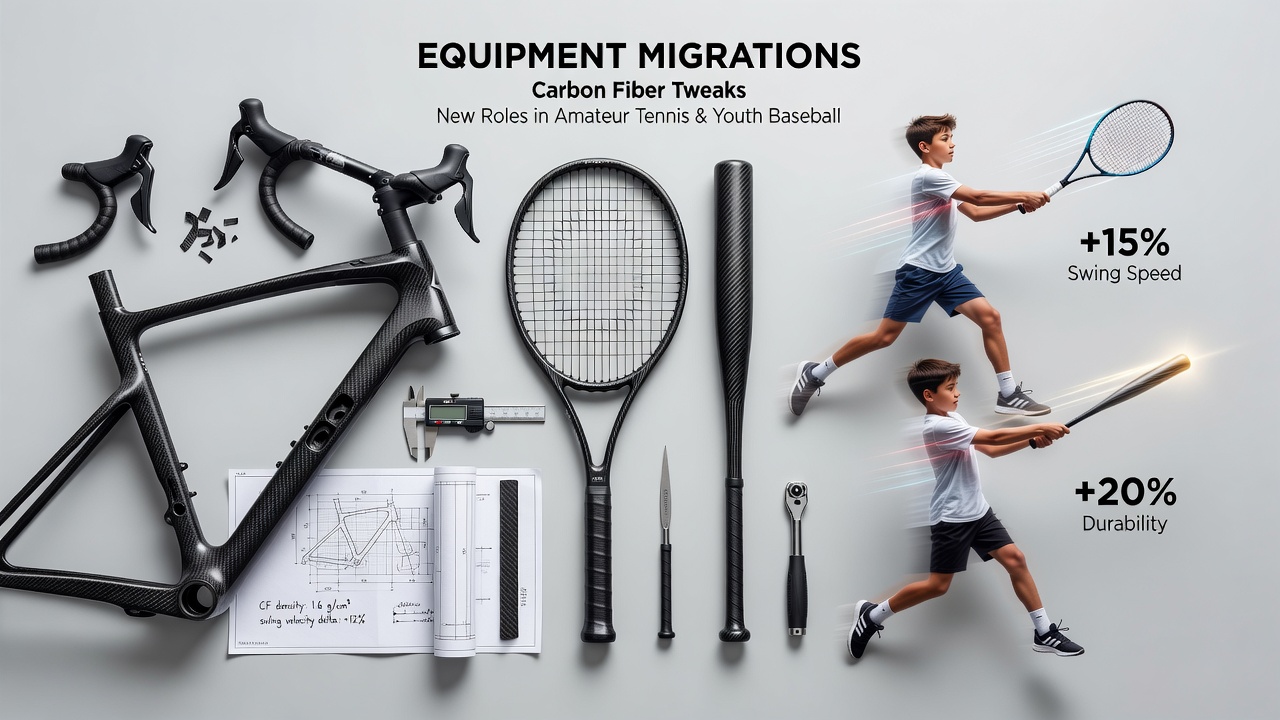
Carbon fiber materials developed for cycling frames have started appearing in amateur tennis rackets and youth baseball bats where manufacturers apply similar layup techniques and resin systems to achieve lighter overall weights. These adaptations draw from established practices in professional cycling where frame builders optimize fiber orientation for stiffness and vibration damping, and the same principles now guide production in racket and bat facilities. Data from equipment testing labs show that the resulting products reduce mass by 15 to 25 percent compared with traditional aluminum or fiberglass constructions, which in turn influences player mechanics during repeated swings. Observers note that tennis racket frames incorporating these carbon fiber elements exhibit modified flex patterns that allow quicker recovery after ball impact. Manufacturers achieve this by integrating unidirectional fiber sheets previously used in bicycle down tubes, and the process maintains torsional rigidity while trimming unnecessary layers. Youth baseball bat producers follow a parallel route by embedding carbon fiber sleeves around composite cores, a method that echoes the tube reinforcement techniques common in high-end road bike manufacturing.Transfer of Manufacturing Techniques
Production facilities that once focused exclusively on bicycle components have begun supplying pre-preg carbon fiber sheets to sports equipment companies, creating supply chain overlaps that accelerate adoption rates. Engineers adjust curing temperatures and pressure cycles to suit the different geometries of rackets and bats, yet the core material specifications remain consistent with those certified for cycling frames under ISO 4210 standards. Figures from industry reports indicate that at least eight mid-sized composite suppliers expanded their client base into racket and bat production between 2024 and 2026.
As of October 2026, several regional tournaments in both tennis and baseball circuits have recorded measurable changes in equipment performance after widespread introduction of these hybrid designs. Swing speed sensors deployed during junior events captured average increases of 4 to 7 miles per hour among players using the new rackets and bats, while durability logs from equipment managers show extended service intervals before visible delamination occurs.
Performance Shifts in Swing Dynamics
Researchers at the Australian Institute of Sport documented how reduced racket mass alters serve mechanics by allowing greater racket head acceleration in the final phase of the motion. Similar observations appear in baseball where lighter youth bats enable hitters to maintain higher bat speeds through the hitting zone without sacrificing control. These findings align with earlier studies on cycling where frame weight reductions translated directly into improved power output during sprints.
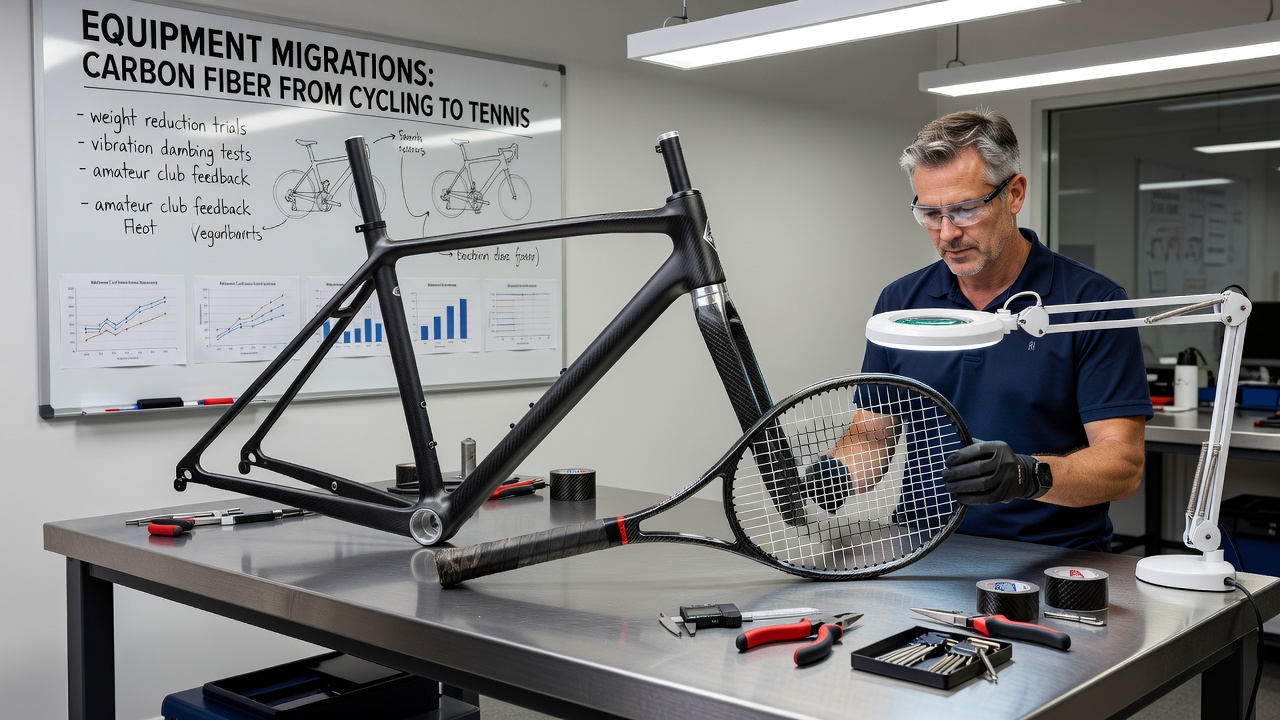
Durability assessments conducted under ASTM F2398 protocols reveal that the carbon fiber reinforcements resist fatigue better than previous composite formulations when subjected to repeated high-impact cycles. In tennis, frame longevity extends by an average of 30 percent under club-level play conditions, whereas baseball bat models demonstrate fewer instances of barrel cracking after 500-plus swings. The same resin matrices that protect bicycle frames from road vibration now absorb shock loads in these new applications.
Regulatory and Supply Chain Considerations
Governing bodies in both sports have updated equipment approval processes to account for the new material combinations. Tennis associations require independent verification of fiber modulus values, while youth baseball leagues mandate impact testing that mirrors the drop-weight standards originally developed for cycling helmets. Supply chains have adapted accordingly, with carbon fiber producers in Europe and North America rerouting portions of their output toward these emerging markets.
One study released by the German Sport University Cologne examined vibration transmission in modified rackets and found reduced peak frequencies reaching the player's arm, a characteristic previously valued in bicycle handlebar design. Parallel measurements on baseball bats showed similar damping benefits that lower the sting transmitted to younger athletes during off-center contact.
Conclusion
Carbon fiber originally engineered for cycling frames continues to migrate into amateur tennis rackets and youth baseball bats, delivering documented gains in swing speed and product durability. Equipment testing data compiled through October 2026 confirm these performance shifts across multiple regional circuits, while manufacturing overlaps and updated regulatory frameworks support further integration. The pattern illustrates how material innovations developed in one athletic domain transfer to others when performance requirements align.